
 By
By 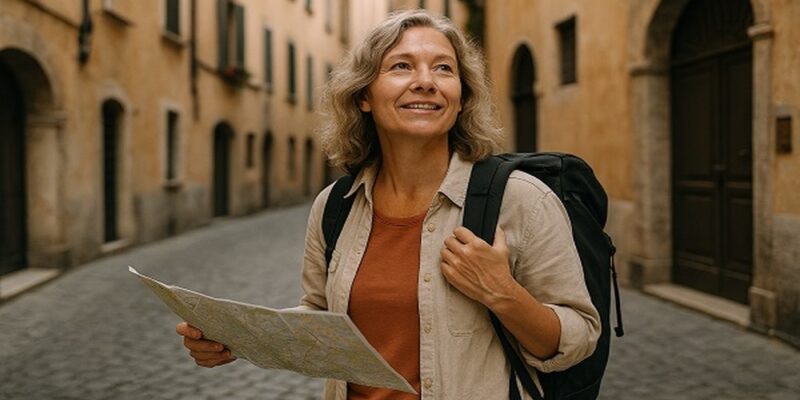
Stepping onto a plane alone for the first time, especially later in life, takes a particular kind of courage. The trip itself often feels less daunting than the moment you decide to book it. Friends ask if you’ll be lonely. Family wonders if you’ll be safe. Sometimes the loudest voice raising those concerns is your own.
The truth is that solo travel after 50 has become one of the most rewarding chapters many travelers ever experience. You bring perspective and life experience that a younger traveler simply doesn’t have. You know what you like. You can move at your own pace without anyone else’s schedule to consider.
Why First Trips Feel So Big
Hesitation about solo travel often comes from imagination rather than reality. Most people picture worst-case scenarios. Getting lost in a city where you don’t speak the language. Sitting alone at dinner feeling self-conscious. Wanting to share a beautiful view and having no one beside you.
In practice, those fears tend to evaporate within a day or two of being on the road. The world is full of welcoming people who will help with directions or strike up a conversation if you give them an opening. The dinners alone become enjoyable once you let go of imagining how others perceive you.
Choose a Destination That Sets You Up to Succeed
The best first solo trip is one where the logistics are simple and the environment is welcoming. Cities with reliable public transportation make navigation easier. Countries with high tourism volume tend to have helpful infrastructure for visitors who don’t speak the local language. English-speaking destinations remove one barrier entirely for nervous first-timers.
Cruise travel has become an enormously popular first solo trip for travelers in their fifties and sixties. European cruises in particular let you visit multiple destinations without having to coordinate trains and hotels between each stop. You unpack once. The ship handles the moving around. You get a private cabin for solitude when you want it and a full ship of fellow travelers when you don’t.
Plan More Than You Think You Need To, Then Plan Less
A good first solo trip benefits from solid pre-planning. Book your flights with comfortable layovers. Reserve your first night’s accommodation in advance so you have somewhere to land. Save important documents in your phone and email them to yourself as a backup. Carry a printed copy of your itinerary for the first day.
After the first day or two, leave room in the schedule. Over-planning can make a solo trip feel like a checklist rather than an experience. Some of the best memories come from unscheduled afternoons spent following a curiosity. A neighborhood you wander into. A cafe that catches your eye. A small museum you didn’t know existed.
Safety Without Paranoia
Solo travelers in their fifties and beyond have a few real advantages when it comes to safety. They tend to dress well and blend in more easily than younger backpackers might. A confident presentation makes them less of a target for the small-time scams that prey on visibly nervous tourists.
A few basic habits make a meaningful difference. Keep your money and important cards in two different places. Use a money belt or interior pocket for the day’s spending money. Trust your instincts about a situation or person. If something feels off, leave.
Let people back home know your general itinerary and check in every few days. A quick text or photo lets your family rest easier and gives you a routine that feels comforting from the road.
Dining Solo Without the Awkwardness
The dinner table is where solo travelers most often feel exposed. The fix is mostly mental. Restaurants in tourist-friendly cities see solo diners constantly. Servers don’t think twice about it.
A few tactical tips help too. Reserve a table at restaurants that aren’t romantic-couple destinations. Sit at the bar if the restaurant has one. Bar seating tends to be more sociable and feels less like a spotlight than a two-top in the middle of the room.
Bring a book or your phone if you want company. Pay attention to the food and the room around you. Some of the best meals of your trip will happen at tables for one.
Use the Ship as a Soft Landing
Cruise travelers have a built-in advantage. The ship becomes a familiar space you return to each evening. Meals happen at predictable times. Crew members learn your name within a day or two. Other passengers are usually delighted to share a dinner table or join you for a shore excursion.
Many cruise lines also run programs specifically for solo travelers. Look for shipboard meet-ups for single passengers on the first day. These quickly become circles of new friends you’ll see across the rest of the trip.
Allow Yourself the Slow Days
Solo travel doesn’t require constant motion. Some of the most memorable moments come from a long morning in a cafe with a good book. An afternoon spent sitting on a bench watching the world go by. A quiet hour on the ship’s deck reading or simply looking at the sea.
These slower stretches are part of why people fall in love with traveling alone. You can listen to your own thoughts in a way that group travel rarely allows.
Connection Will Find You
One of the surprises of solo travel is how much human connection happens organically. A fellow passenger strikes up a conversation in the breakfast buffet. A shopkeeper recommends a local specialty. A guide on a small-group tour invites you to join the others at dinner.
You will not be lonely unless you choose to be. Solo travel often produces more meaningful conversations than group travel, simply because the people you meet are speaking with you directly rather than addressing a group.
Coming Home Changed
The biggest reward of a first solo trip isn’t usually the photos or the places. It’s the version of yourself that comes home. You learn that you can handle the unfamiliar. You learn what you actually enjoy when no one else is voting on the day’s plans. You discover that being your own company is something to celebrate rather than endure.
Many solo travelers find that the first trip is the hardest. The second is much easier. By the third, you’re already planning the next one before you’ve finished unpacking.

Comments