
 By
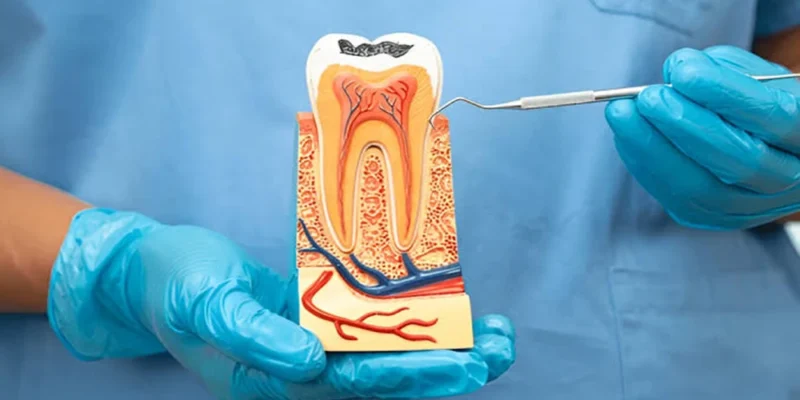
You sit in the dental chair, hear words like crown, bridge, or temporary, and your mind goes straight to time, cost, and whether the final result will actually feel right in your mouth. That stress is real. At Northbrook dentistry, dental restorations affect how you eat, speak, smile, and get through an ordinary day without thinking about your teeth every few minutes.
That is why How 3 D Printing Is Revolutionizing General Dental Restorations matters to patients, not just dentists and labs. The shift is simple at its core. Digital scans and 3D printed dental restorations can shorten steps, improve fit, and make treatment more consistent. It does not mean every restoration is printed, and it does not mean old methods have no place. It means general dentist care is becoming faster, more precise, and often easier on you.
3D Printed Dental Restorations Reduce Delays and Remakes
Traditional restorations usually involve impressions, shipping, lab work, adjustments, and follow up visits. If one step is off, even by a little, the crown or appliance may need refinement or a full remake. You feel that delay in the form of extra appointments, more time off work, and more time living with a temporary that never feels quite normal.
Digital dentistry changes that chain. A dentist can scan your teeth, design the restoration on software, and send that file for printing or in office production. Fewer manual steps often means fewer chances for distortion. Research on 3D printing in restorative and prosthetic dentistry shows growing use across crowns, models, surgical guides, dentures, and provisional restorations because the process can improve efficiency and customization.
You notice the difference in practical ways. A temporary crown may fit better. A printed model can help your dentist plan more accurately. A night guard or denture base can be produced from a digital file that is easier to store and reproduce if needed later. If you have ever had an old impression tray make you gag, digital scanning alone can feel like a relief.
Digital Dental Restoration Technology Improves Precision in General Dentist Care
Fit matters more than people think. A restoration that is slightly off can lead to bite discomfort, food trapping, gum irritation, or early failure. Then the small issue becomes a bigger one. You go in expecting a simple fix and end up needing more chair time because the tooth, the bite, and the surrounding tissue all react to poor fit.
Digital dental restoration workflows help reduce that risk because they rely on highly detailed scans and software based design. A recent review on 3D printing techniques and dental materials describes how additive manufacturing supports accuracy, repeatability, and tailored treatment planning across several dental applications.
That does not mean every printed restoration is automatically better. Materials, printer calibration, design skill, post processing, and case selection all matter. A front tooth crown has different demands than a study model or a temporary bridge. The best result still depends on clinical judgment. Technology supports the work. It does not replace it.
3D Printing in Dental Care Expands What a General Dentist Can Offer
Access matters when you need care now, not after weeks of waiting. As 3D printing in dental care becomes more common, a general dentist may be able to handle more parts of treatment with greater control over timing. That can help with same day planning, faster temporaries, clearer communication, and fewer surprises.
Regulation matters too. The FDA overview of 3D printed medical devices explains that these products still require careful attention to design, manufacturing, material performance, and safety. For patients, that means one thing. Ask what is being printed, what material is being used, and whether it is intended as a temporary or long term restoration.
| Factor | Traditional Workflow | 3D Printing Workflow |
|---|---|---|
| Initial records | Physical impressions | Digital scan or scan plus photos |
| Turnaround time | Often longer due to shipping and manual steps | Often shorter with digital file transfer and in house production options |
| Patient comfort | Impression material can be uncomfortable | Scanning is often easier to tolerate |
| Remake risk | Can rise with impression distortion or handling errors | Can drop when scans and designs are accurate |
| Reproducibility | May require starting over from scratch | Digital files can often be stored and reused |
| Best uses | Broad range of restorations | Strong for models, guides, temporaries, dentures, and selected final restorations |
Practical Steps Help You Get Better Dental Restoration Results
Ask what part of the process is digital. A restoration can involve digital scanning, digital design, milling, printing, or a mix of methods. Ask your dentist whether the crown, bridge, model, denture, or guide is being printed and why that approach fits your case.
Ask about the material and lifespan. Some printed restorations are meant to be temporary. Others are designed for longer use. If you are paying for treatment, you deserve a clear answer about durability, wear, stain resistance, and how the material performs under bite pressure.
Ask how adjustments and remakes are handled. Even good restorations sometimes need bite refinement or contour changes. Find out whether your digital file will be saved and whether that makes replacement easier if the restoration chips, loosens, or needs to be reproduced later.
General Dental Restorations Are Becoming More Patient Friendly
The real value of this shift is not the printer itself. It is the way the process can reduce friction for you. Fewer messy impressions, fewer delays, better planning, and more predictable results can turn a frustrating experience into a manageable one. That matters when you are already dealing with pain, a broken tooth, or the cost of care.
3D printing in dentistry is changing how general dental restorations are planned and delivered, and patients are already feeling that change in the chair. If you need restorative treatment, ask your general dentist how digital workflows and printing may improve your options and your outcome.

Comments